



Secretary of State Marco Rubio stood before the Acropolis and declared America will pursue national power without apology, a civilizational call that puts Western decline on notice.
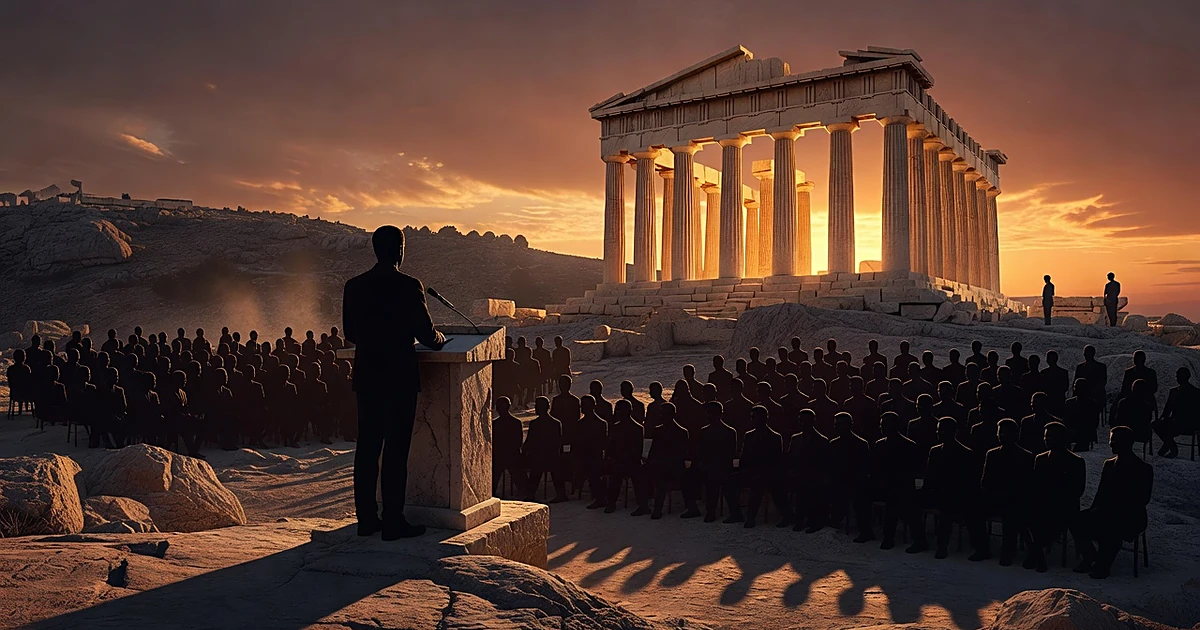
On Wednesday, Oct. 7, 2026, Rubio delivered a highly produced sunset address at the Pnyx hill in Athens, with the Parthenon lit behind him, before roughly 250 invited guests. Senior Greek officials, diplomats, and business, education, and cultural leaders filled the ancient assembly ground where Athenians once practiced democracy.
CBS News reported the speech cast ancient Greece as the wellspring of Western democracy, philosophy, and character, and warned that modern Western societies have let those traits erode. Rubio framed the next decade as decisive for the next century.
Greece was the second stop on a four-day, three-country tour that began in Iceland and ends in Portugal. The trip centered on hard questions of American power: where U.S. forces can operate, how NATO allies can help counter Russia and Iran, and how American energy can displace Russian supplies.
Rubio told the crowd the West first fully realized its defining traits in Athens.
"Here, in Athens, we found the first full realization of all the essential traits that would come to define the West,"
He listed those traits as "fierce individuality and relentless ambition," plus "a yearning for discovery, for adventure, risk and glory." He traced the line through Rome, European Christianity, and the United States, citing figures from Alexander the Great to Columbus.
Then he turned to the present. Too many modern ideologies, he said, chase a world of perfect safety, empty of risk or failure, where neither victory’s glory nor defeat’s shame remains. "We hold the most exceptional things among us hostage to the average, the ordinary, the mediocre."
The stakes, in his telling, are civilizational.
"The course we take will determine whether the West maintains its place at the head of the world or resigns itself to a future of atrophy and servitude and decline. We will either choose to act now or lose the choice to act at all,"
He tied the choice directly to the Trump administration.
"Under President Trump, the United States has made its choice. We choose the unapologetic pursuit of national power, to take back control of our critical supply chains, to reindustrialize our economy, to rebuild our defense, to fight for dominance of the technologies and industries of the future."
RealClearPolitics highlighted the same core line and noted Rubio’s reminder that Plutarch was among the most cited authors in the Federalist Papers, a direct bridge from classical Greece to the American founding.
He praised the builders of the Parthenon for aiming upward. Their highest aspiration, he said, was to surpass others and strive to be best in all things. That spirit, not managed mediocrity, is what he wants restored.
The Athens address expanded arguments Rubio made in February at the Munich Security Conference, where he warned Europe faced "civilizational erasure." A year before that Munich appearance, Vice President JD Vance used the same stage to rebuke European leaders.
In Athens the tone stayed lyrical but the policy was concrete: rebuild industrial capacity, secure supply chains, restore defense, and compete for future technologies. Rubio called Greece a "strong and model NATO ally" after the sixth U.S.-Greece Strategic Dialogue with Foreign Minister George Gerapetritis. Talks covered defense, energy, and regional security.
Gerapetritis said Greece could offer maritime help in the Strait of Hormuz if a viable peace process takes hold. The United States is seven months into its war with Iran. No end agreement has been secured, and the conflict has pushed oil and gasoline prices sharply higher as midterms approach.
On nuclear enrichment, Rubio left little ambiguity.
"I don't understand what the confusion is about the nuclear program. Iran cannot have a nuclear weapon. Simple, period and end of story,"
He declined to detail acceptable enrichment levels. Vance said this week Iran would need a "meaningful" reduction in uranium enrichment capacity. Rubio also said Western heroes may die for their cause but "do not worship death", a clear contrast with regimes that glorify martyrdom.
From Iceland, Rubio left open the possibility of a larger American military footprint while stressing cooperation. "We'd never do anything without cooperating with officials here about what's available. I think there is a willingness to do more together."
He pointed to a Greenland deal he helped broker last month as proof of the new approach. "It is a vision we saw in action," he said, one that would "reshape the Arctic and bolster the security of all of NATO." The refrain was simple: "We want to win together." And: "We must win together."
That same clarity has marked other recent moves from the State Department, including when Rubio denied visas to birth tourism operators on a tight diplomatic timeline.
Pressed by CBS News about congressional scrutiny of U.S. Ambassador Kimberly Guilfoyle, allegations she used her post to benefit private business interests in Greece, which she has denied, Rubio shut the topic down. "This is not the format where we're going to address this." He added that the embassy has done "a great job" and that Guilfoyle "has been a strong ambassador."
The New York Post reported the nearly 30-minute speech framed the moment as an inflection point for both the United States and the broader civilization, urging Europe to confront present dangers. Rubio dismissed talk of seeking higher office even as speculation about 2028 swirled.
Rep. Nicole Malliotakis praised the address and called Rubio the future of the party and the nation. The Washington Examiner described the staging, Parthenon illuminated, classical setting, as masterful, noting the speech’s unapologetic nationalism and economics of the common good track closely with Vance’s lane. Rubio has repeatedly said he will not challenge Vance for the 2028 nomination, yet the performance underscored why many view him as formidable if he ever reversed course.
He has already had to swat away the chatter directly, much as when Rubio dismissed 2028 presidential talk and insisted his focus remains the State Department.
Polling noise continues anyway. Coverage of how Rubio surges in New Hampshire shows the vice president’s early frontrunner status is no longer uncontested in the imagination of primary voters.
National security messaging has stayed consistent across theaters. After the Fairford base incident, Rubio flagged a foreign actor while British suspects walked free on bail, another case of naming threats without apology.
President Trump has publicly floated both Rubio and Vance as possible future standard-bearers for the movement. The Athens speech did not announce a candidacy. It did announce a governing philosophy: strength over managed decline, excellence over enforced mediocrity, and alliances that actually win.
Rubio’s argument is straightforward. The West still possesses the inheritance of Athens, individuality, ambition, discovery, and the will to be best. It has spent years treating those traits as problems to be regulated away. Under Trump, the United States is choosing the opposite path: reindustrialize, control critical supply chains, rebuild defense, and dominate the technologies that will decide the next century.
Europe is being invited to join that project rather than manage its own slow erasure. Greece, as a frontline NATO ally, is being treated as a partner in energy, maritime security, and regional defense. Arctic posture is tightening. Iran is being told, without diplomatic fog, that a nuclear weapon is off the table.
The setting was not accidental. Speaking where citizens once gathered to govern themselves, with the Parthenon in view, Rubio tied American power to the oldest Western claim: that free people should aim high, accept risk, and refuse servitude.
Western nations that forget how to strive will not be remembered for their safety regulations. They will be remembered for handing the future to those who never stopped competing.