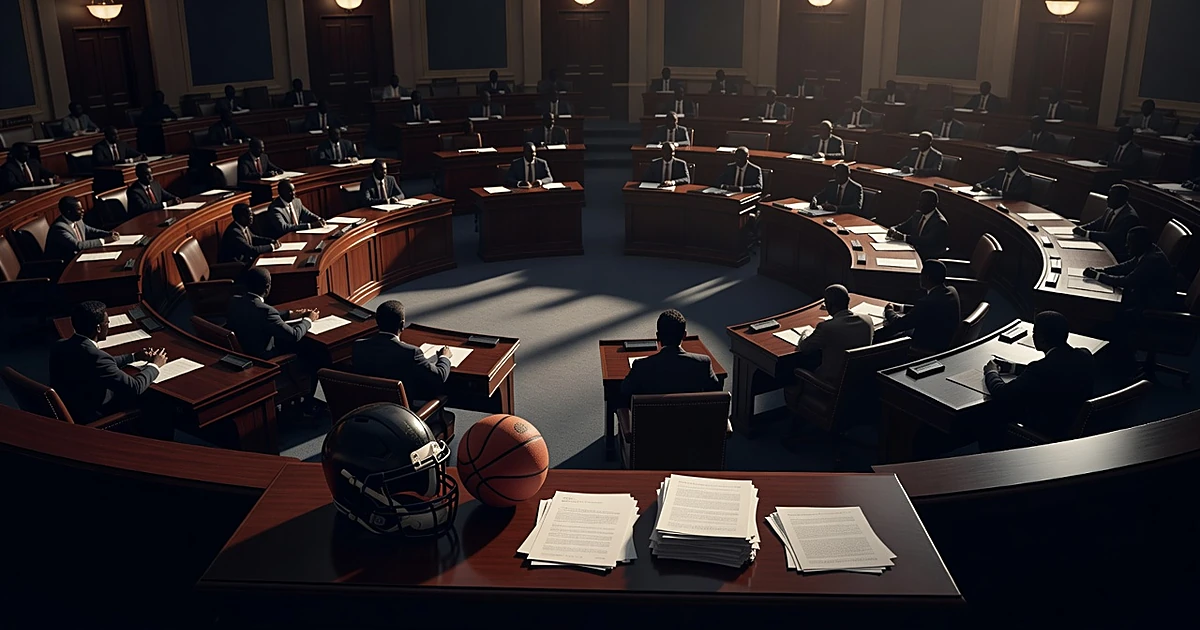



The Senate passed the Protect College Sports Act 77-22 to set federal NIL rules and athlete transfer limits, a bipartisan push President Trump says will save college sports.
Senators cleared the Protect College Sports Act late Monday night by a 77-22 vote, advancing national standards for name, image, and likeness pay after years of courtroom upheaval left college athletics without stable rules.
The measure now heads to the House. It would put a federal framework around athlete compensation, transfers, and enforcement that supporters say smaller programs need to survive.
Washington Examiner reported the bill builds on the 2025 House v. NCAA settlement that first let colleges share revenue directly with athletes, then adds guardrails the conferences and lawmakers spent months negotiating.
Senate Commerce Committee Chairman Ted Cruz of Texas and ranking member Maria Cantwell of Washington co-led the bill. Both called the current system unsustainable after court cases stripped away old NCAA limits and opened NIL earnings.
Cruz told colleagues the fight is about more than paydays at the biggest brands. On the Senate floor he framed the stakes around programs that still need room to climb.
“It’s about protecting the underdog and ensuring that each and every team has the opportunity to develop and compete, and maybe even make it to the Final Four next season, but those stories only happen if those teams still exist,” Cruz said.
Reuters reported Cantwell pressed the core legal point as well. “There are several things in this bill that are really important to enshrine into federal law at this time. First and foremost, the federal right to NIL,” she said.
Cruz had also made the case on ESPN’s College GameDay before the vote, arguing Congress had to act once the courts rewrote the old amateur model.
The legislation would establish a federal framework for NIL payments and cap how much universities can pay athletes directly. It would also set transfer rules and give the NCAA limited antitrust protection when it carries out the new federal standards.
Under the transfer framework described in the package, athletes would get one undergraduate transfer without penalty and another for graduate school. Lawmakers also wrote in scholarship and medical protections, plus a 5% cap on agent fees.
Just the News reported the bill would further limit school spending on athletes to $50 million a year, a ceiling aimed at keeping the richest departments from turning every roster battle into an arms race.
National Review noted the measure stays neutral on whether athletes should be treated as employees, while still locking in revenue sharing from media, tickets, and sponsorships alongside the NIL rights.
Supporters say the limited antitrust shield is the practical piece. Without it, they argue, the NCAA cannot enforce uniform rules without landing back in court. Opponents counter that the same shield could make it harder for athletes to challenge pay limits later.
That dispute did not stop a lopsided roll call. The 77-22 result cut across party lines and moved an amended bill out of the chamber in one night of work that fit a broader pattern of late Senate vote pushes before long breaks.
The Southeastern Conference and the Big Ten first opposed the bill. After talks with Cruz, Cantwell, Sen. Eric Schmitt of Missouri, and their staffs, both leagues reversed course.
In a joint statement, the conferences said they “support the Protect College Sports Act as currently drafted, following detailed and productive negotiations with Senators Cruz, Cantwell and [Sen. Eric Schmitt (R-MO)] and their respective staffs.” They added, “We appreciate the substantial work that has gone into this effort.”
That buy-in mattered. The two richest football leagues had the most leverage to sink a national standard. Once they signed off, the path through the Senate widened.
Not every Democrat was convinced the bill aimed at the right money. Sen. Chris Murphy of Connecticut spoke against the package on the floor and pointed past athlete paychecks to the coaches and facilities budgets that drive deficits at big schools.
“Last year the buyouts for just three coaches at [Louisiana State University] totaled over $169 million, six times the annual operating deficit of the entire athletics program and so, if you want to know what’s driving the deficit at these big schools, it’s not simply the amount of money they’re paying the students,” Murphy said. “Those numbers are dwarfed by the amount of money that’s going to coaches and to facilities.”
His critique did not flip the outcome. Senate Majority Leader John Thune backed the bill as a stability measure, and the chamber still produced a landslide.
Fox News reported Thune’s blunt assessment of the status quo: “I think most people acknowledge that the current landscape of college sports is a mess. It needs to be addressed.”
In separate remarks, Thune said he was proud the Senate had passed a bill “which will restore stability in college athletics,” language that tracked the same order-over-chaos case Cruz made all week.
President Donald Trump urged Congress to finish the job and said he would sign the measure if it reaches his desk. Breitbart reported his verdict after the Senate vote: “This is a really big deal. It will not only save college sports, it will save the colleges themselves.”
Trump had already told lawmakers he wanted a bipartisan product. “I’m urging the House and the Senate to come together, bipartisan if possible and it looks like they have done, to send the bill to my desk and I will sign it,” he said.
Cruz kept the pressure on after the vote as well. National Review reported his floor warning that delay itself is the risk: “We must act, and we must act now. We must pass the bipartisan Protect College Sports Act. This bill puts an end to the chaos plaguing college athletics.”
Cantwell struck a more measured note, saying the bill does not fix every problem but puts the system “on our way to solving the problems that exist and preserving the opportunities for the future.”
The hard part is timing. The House is not scheduled to return until after November’s midterm elections, so the bill faces a steep climb to reach Trump before the current Congress ends. That calendar squeeze echoes other stalled files after leaders shortened the House schedule heading into the fall campaign.
Cruz has argued the alternative is wishful thinking. “It would be nice if college sports could somehow magically fix itself, but this is a matter of law, federal law, and only Congress can fix it,” he said as the amended bill left the Senate.
For now the Senate has done its part in a rare cross-aisle show of force, the kind of result that lands differently in a midterm climate where voters have already been signaling fatigue with ideological extremes and rewarding practical order.
College sports got a national rulebook through one chamber. Whether athletes, underdog programs, and fans actually get the stability will depend on whether the House treats the chaos as a problem worth finishing.