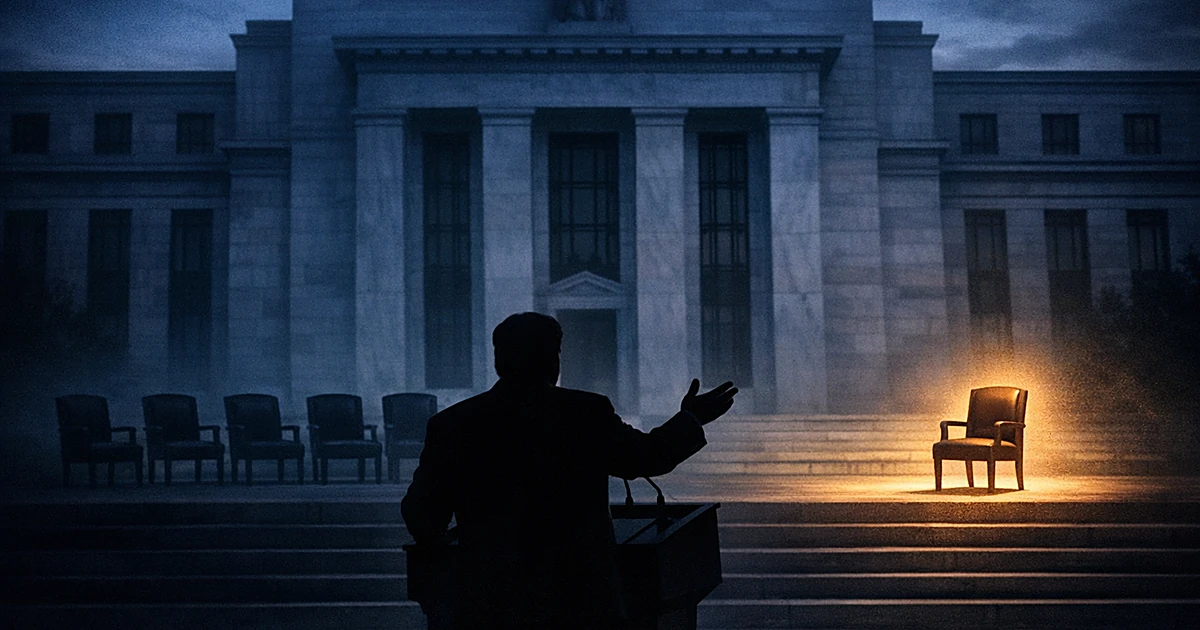
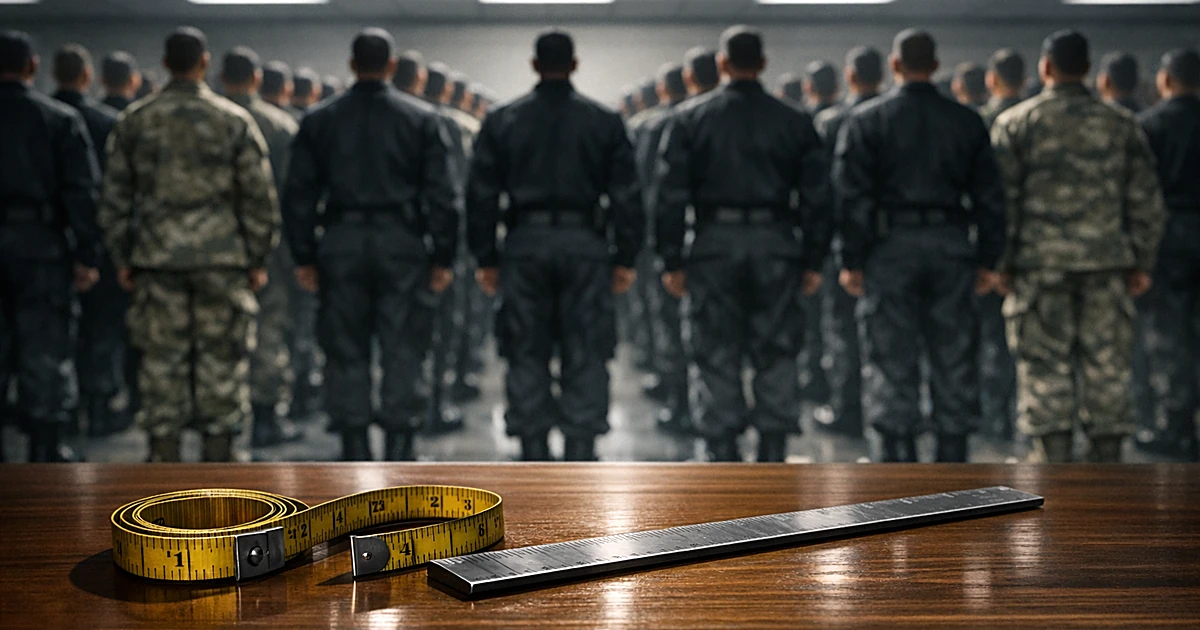

Defense Secretary Pete Hegseth's upcoming "State of the Force" address will be open only to service members who pass waist-to-height checks and meet what the Pentagon calls "impeccable" grooming standards, requirements that underscore a broader push to restore traditional military discipline.
Internal Pentagon emails obtained by The Wall Street Journal and reported by The Hill directed Army commanders to screen troops before selecting them to attend the event, scheduled for later this month. The emails spelled out that every attendee must have "impeccable grooming and uniform standards (no exception)" and meet waist-to-height ratio requirements. Commanders, not the troops themselves, choose who goes.
The criteria go well beyond appearance. Selected service members must be "consistently rated as top performers within their formations," hold a "clear record of integrity, discipline and selfless service," and "demonstrate strong presence, clear communication and sound judgment under pressure." They must also "serve as role models for their peers and subordinates." Top picks will even get the chance to work out alongside Hegseth, based on what the emails describe as "demonstrated leadership quality and professional character."
The attendance standards did not arrive out of nowhere. Roughly a year before the address, Hegseth unveiled new grooming standards for the entire force, including tighter rules on facial hair. At the time, he framed the change in blunt terms:
"The grooming standard set by the U.S. military is to be clean shaven and neat in presentation for a proper military appearance."
Pentagon chief spokesperson Sean Parnell later clarified that service members could still obtain shaving waivers through military medical officials, with the unit commander serving as the final approving authority. Hegseth followed up by cracking down on sailors who ignored the beard ban, a signal that the new rules carried real consequences.
The Pentagon did not respond to The Hill's request for comment on the State of the Force attendance criteria.
About two months before the address was announced, Hegseth posted a video on X under the handle @SecWar outlining a separate but related initiative: mandatory testosterone screening for male active-duty and reserve service members older than 30. Blood tests would check hormone levels, and troops whose results warranted it would be offered testosterone replacement therapy. Female service members, under the same guidelines, were asked whether they experienced disrupted menstrual cycles that could signal hormonal dysregulation.
Hegseth cast the program in readiness terms, not vanity:
"This initiative, it's not about artificial enhancement; it's about restoring and optimizing your natural capabilities, protecting your longevity, ensuring you have the biological foundation required to sustain and fight."
That guidance drew its own controversy. The Pentagon pulled its testosterone screening guidance just one day after publishing it, though the current status of the policy remains unclear from available reporting.
The attendance requirements for the State of the Force address fit a broader pattern under Hegseth's tenure. He has moved aggressively to reshape military culture through personnel decisions, not just memos. Earlier this year, Hegseth halted promotions of four Army officers over their links to recently ousted generals, a step that sent a clear message about accountability at the top.
Those moves have not gone unchallenged. Lawmakers in both parties have raised oversight questions about the pace and scope of Hegseth's personnel decisions, and some of his policy shifts, like lifting mandatory vaccine requirements for recruits, have drawn scrutiny when real-world consequences followed.
Still, the logic behind the State of the Force attendance standards is straightforward. Hegseth wants the troops sitting in front of him to reflect the force he is trying to build: fit, disciplined, well-groomed, and proven in their units. Commanders pick the best. Everyone else watches from somewhere else.
Some details remain unresolved. The specific waist-to-height ratio thresholds were not disclosed in the reported emails. It is also unclear whether the selection criteria apply only to Army commanders or extend across all branches, the reporting references both "Army commanders" and "commanders throughout the military" without fully reconciling the scope. The venue, exact date, and expected size of the audience have not been made public.
Critics have questioned whether Hegseth's string of personnel directives amounts to micromanagement or a necessary course correction after years of what many conservatives saw as a military leadership class more interested in diversity initiatives than combat readiness. His military firings drew oversight demands from lawmakers on both sides of the aisle, but the underlying premise, that the armed forces should prioritize physical fitness, discipline, and warrior ethos, is one most Americans outside Washington would find hard to argue with.
Requiring troops to look sharp and perform at a high level before they sit in the room with the Defense Secretary is not a radical concept. For decades, the military expected exactly that. The fact that restoring those expectations now qualifies as news says more about how far standards drifted than about anything Hegseth is doing to bring them back.