


The Philippine Senate convened as an impeachment court Monday to try Vice President Sara Duterte on criminal charges, a dramatic escalation in a political crisis that last week produced an actual exchange of gunfire between Senate security personnel and government agents inside the legislative compound.
The trial follows an overwhelming impeachment vote by the Philippine House of Representatives, which accused Duterte of unexplained wealth, misuse of state funds, and a public threat to have President Ferdinand Marcos Jr. assassinated if she herself were killed as a result of their political disputes. Duterte has denied the charges but has refused to answer the allegations in detail.
The proceedings cap a week of turmoil that would test the stability of any democratic institution, and that raises hard questions about whether the Philippines can hold together a constitutional process while its political factions wage open warfare against each other, sometimes literally.
The sequence of events, as reported by the Associated Press, unfolded rapidly. Last Monday, the House voted to impeach Sara Duterte. The same day, 13 of the Senate's 24 members, a slim majority led by allies of the Duterte family, wrested control of the Senate presidency, installing Senator Alan Peter Cayetano as the chamber's new leader.
That power grab depended on the sudden reappearance of Senator Ronald dela Rosa, a former national police chief under Sara Duterte's father, ex-President Rodrigo Duterte. Dela Rosa had been absent from the Senate for months, fearing arrest. His presence gave Cayetano the majority he needed.
Dela Rosa told reporters he came out of hiding and traveled to the Senate in Cayetano's van. He said National Bureau of Investigation agents nearly arrested him on the way. He described dashing into a stairway and running to the Senate plenary hall, where Cayetano and other allies placed him under the chamber's "protective custody."
The reason for dela Rosa's fear of arrest: the International Criminal Court, also last Monday, named him as a co-conspirator in the crimes-against-humanity case against Rodrigo Duterte and unsealed a warrant for his arrest. Dela Rosa had served as the elder Duterte's national police chief and enforced anti-drug crackdowns that killed thousands of mostly petty suspects.
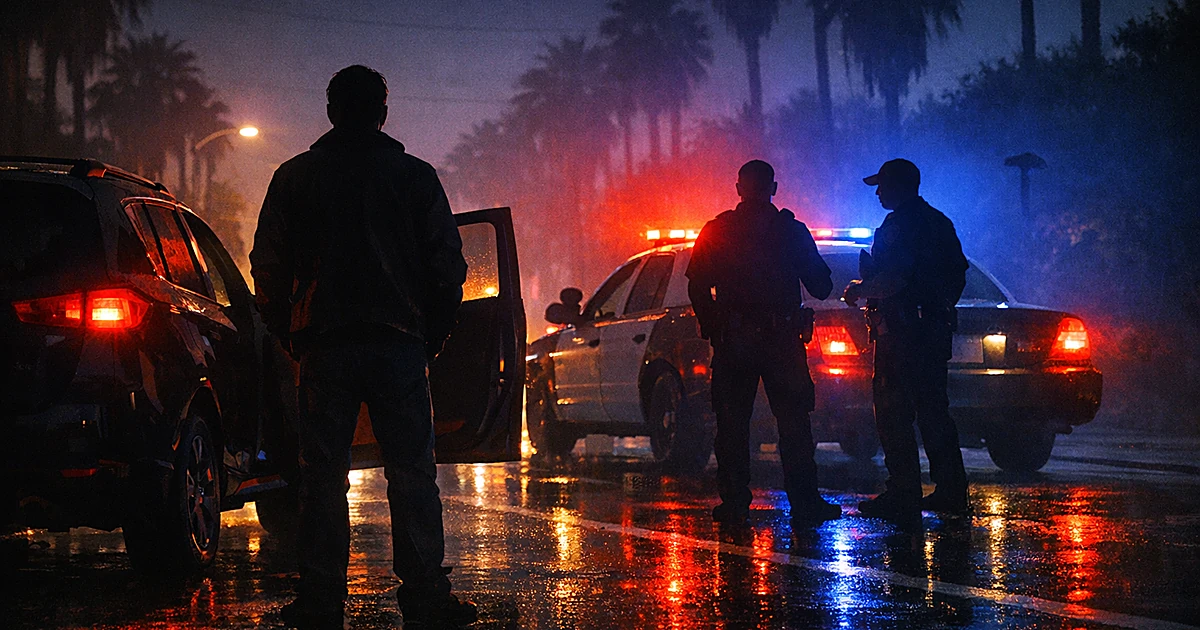
By Wednesday night, the standoff between Duterte allies inside the Senate and government agents outside had turned violent. Senate security personnel and government agents positioned in an adjacent building exchanged fire. Mao Aplasca, the chief of Senate personnel, said his officers fired "warning shots."
No injuries or property damage were specified. But the spectacle of gunfire inside a legislative compound, in a country that styles itself a democracy, prompted Marcos to appeal for calm in a late-night address on national television.
Authorities said they were investigating whether the exchange of fire may have been instigated to enable dela Rosa's escape. Cayetano later told reporters that dela Rosa had disappeared from the Senate. His current whereabouts remain unknown.
Americans accustomed to impeachment being wielded as a political weapon in Washington may find the Philippine version even more alarming, not because the constitutional mechanism is different, but because the surrounding chaos involves actual firearms and fugitives.
The impeachment trial cannot be understood apart from the broader collapse of the Duterte-Marcos alliance. Sara Duterte and Ferdinand Marcos Jr. ran together as allies in the 2022 presidential election. That partnership has since disintegrated into open hostility.
Sara Duterte has blamed Marcos for what she called the "kidnapping" of her father, a reference to Rodrigo Duterte's arrest and transfer to the International Criminal Court in The Hague last March. The elder Duterte remains detained there on charges of crimes against humanity stemming from the drug-war killings he ordered while in power.
The vice president has announced her intention to seek the Philippine presidency in 2028, a declaration that frames the impeachment fight not just as a legal proceeding but as a contest over the country's political future. Her allies' seizure of the Senate presidency last Monday, timed to coincide with the House impeachment vote, suggests a coordinated strategy to control the trial from the inside.
Whether that strategy can succeed with dela Rosa missing and an ICC warrant hanging over the Duterte camp's most prominent enforcer is an open question. The political dynamics recall the way legal proceedings involving politically connected families tend to generate more heat than accountability.
The Philippine Senate now sits as both a legislative body riven by factional warfare and a court of law tasked with rendering judgment on the vice president. Thirteen senators loyal to the Duterte family control the chamber's leadership. The remaining eleven presumably align with the Marcos administration or occupy some middle ground.
That arithmetic matters. An impeachment conviction requires a supermajority. With Duterte allies holding the gavel and a slim majority of seats, the trial could become an exercise in procedural obstruction, or it could fracture unpredictably if individual senators break ranks under pressure from the ICC investigation, public opinion, or their own political calculations.
The charges themselves are serious. Unexplained wealth and misuse of state funds are corruption allegations. The accusation that Duterte publicly threatened to have the president assassinated, even conditionally, goes beyond ordinary political rhetoric. Yet Duterte's refusal to answer the allegations in detail leaves the public without a substantive defense to weigh against the House's case.
Institutions around the world face stress tests when political leaders refuse to submit to normal accountability. The question of how legislatures and courts interact under political pressure is not unique to the Philippines, but the Manila version involves a level of physical danger that most democracies have not seen in generations.
Looming over the domestic crisis is the International Criminal Court's expanding reach into Philippine politics. Rodrigo Duterte's detention in The Hague and the newly unsealed warrant for dela Rosa mean that two of the most powerful figures in the Duterte political machine now face international prosecution.
Sara Duterte's framing of her father's arrest as a "kidnapping" orchestrated by Marcos is a political claim, not a legal finding. But it serves a clear purpose: it casts the Marcos administration as a collaborator with foreign courts against a Philippine family, a narrative with potent appeal in a country where sovereignty and national pride run deep.
Dela Rosa's dramatic sprint through the Senate, and his subsequent disappearance, adds a layer of farce to an already volatile situation. A sitting senator, wanted by an international tribunal, shows up just long enough to flip control of the chamber, then vanishes. Authorities now suspect the gunfire may have been staged to cover his exit.
That sequence raises questions about whether the Senate's "protective custody" was a genuine exercise of legislative privilege or a coordinated effort to shield an ICC fugitive. The distinction matters, not just for Philippine law, but for the credibility of the institution now sitting in judgment of the vice president.
The broader pattern, of legal systems being tested by politically explosive cases, is familiar to anyone watching courts and legislatures struggle with partisan pressure. The Philippine version simply dispenses with the pretense of civility.
The impeachment trial will proceed under a Senate leadership installed by the defendant's allies, in a chamber where gunshots rang out days ago, with a key senator-turned-fugitive unaccounted for, and with the defendant herself refusing to engage the substance of the charges.
Marcos has called for calm. Sara Duterte has called the proceedings politically motivated. Her allies hold the gavel. The ICC holds her father. And the Philippine public is left to watch a constitutional process unfold in conditions that make the process itself look like part of the problem.
Several facts remain unresolved. The investigation into whether the exchange of fire was staged has produced no public conclusion. Dela Rosa's location is unknown. The specific evidence underlying the House impeachment vote has not been detailed publicly. And the question of whether a Senate controlled by the accused's faction can conduct a credible trial has no obvious answer.
For Americans watching from a distance, the lesson is not subtle. Political figures who treat legal institutions as instruments of faction eventually hollow out the institutions themselves. The Philippines is further down that road than most democracies, but the direction of travel is not unique to Manila.
When the people tasked with upholding the law are the same ones dodging warrants and firing warning shots, the trial is already a verdict, on the system itself.