



Thomas Goldstein, the lawyer who co-founded SCOTUSblog and argued more than 40 cases before the Supreme Court, has been convicted by a federal grand jury on a sprawling list of charges: a single count of tax evasion, four counts of willful failure to timely pay taxes, three counts of false statements on mortgage loan applications, and four of eight counts of aiding and assisting in the preparation of false tax returns.
The man who built a career explaining the highest court in the land to the public couldn't be bothered to follow the tax code himself.
Prosecutors painted a picture of a man who lived large and paid small. Goldstein, they said, frequently played in poker games involving tens of millions of dollars. Beginning in 2016, he simply stopped paying taxes on his significant gambling income. That wasn't an oversight. That was a choice sustained over years.
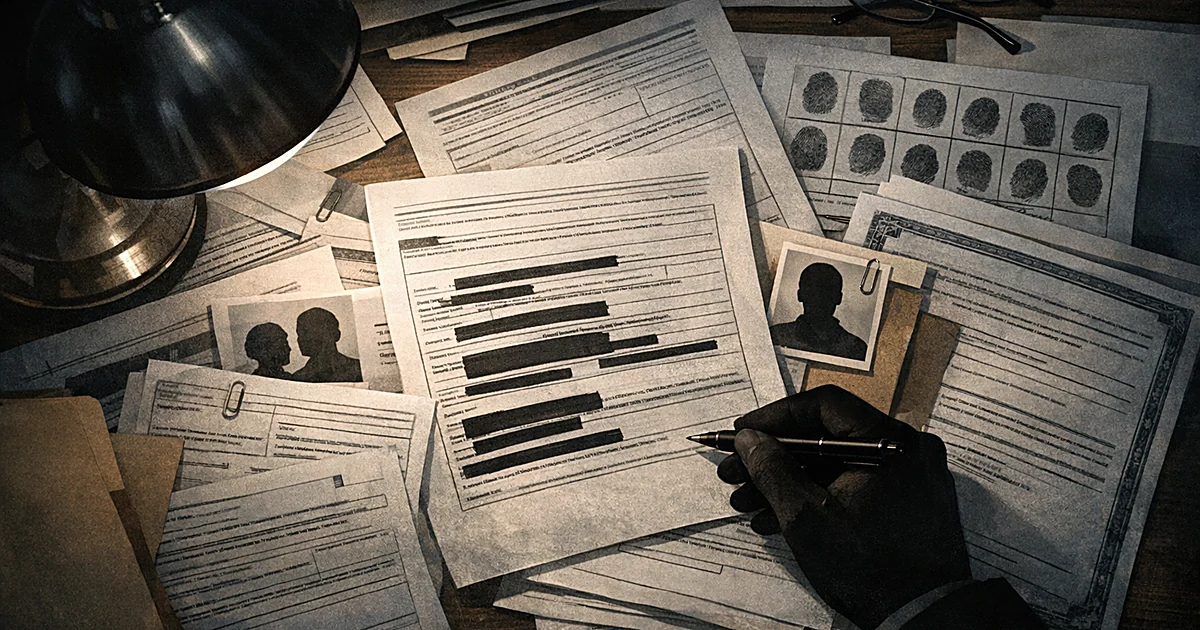
It got worse. Prosecutors alleged Goldstein diverted payments to his law firm for paying off poker-related debts and falsely deducted those debts as business expenses. Meanwhile, he spent millions on luxury personal expenses. The scheme wasn't sophisticated so much as brazen: earn enormous sums, funnel the obligations through a law firm's books, and hope nobody looked too closely, as The Hill reports.
U.S. Attorney for the District of Maryland Kelly Hayes didn't mince words:
"Goldstein chose fraud and deceit over honesty and tried to cheat the American taxpayer while living a lavish lifestyle."
"He gambled that he wouldn't get caught, and that gamble did not pay off."
The mortgage fraud charges add another layer. In 2021, Goldstein sought financing for a $2.6 million home in Washington, D.C. Prosecutors said he omitted millions of dollars in liabilities on the applications. Those false statements enabled him to obtain a $1.98 million loan he likely never would have qualified for on honest terms.
Goldstein's defense attorney, Jonathan Kravis, told jurors the government failed to adequately investigate the case against his client. He characterized the tax return issues as "innocent mistakes," arguing Goldstein didn't cheat or knowingly make false statements on the documents.
"A mistake is not a crime."
The jury disagreed on twelve of the counts. When you stop paying taxes on gambling income for years, divert funds through your law firm to cover poker debts, deduct those debts as business expenses, and then lie on mortgage applications to buy a multimillion-dollar home, the word "mistake" does a lot of heavy lifting.
Goldstein wasn't some anonymous tax cheat. He was a pillar of the Supreme Court bar. He argued more than 40 cases before the justices before retiring in 2023. He was part of the legal team that represented Democratic presidential nominee Al Gore in the Supreme Court's review of the 2000 election, a case that former President George W. Bush, a Republican, ultimately won. SCOTUSblog itself became one of the most cited sources on Supreme Court coverage in the country.
This is a man who spent his professional life inside the machinery of American law. He understood legal obligations better than virtually anyone. That makes the fraud not more surprising but more revealing.
There is a particular kind of arrogance that thrives in elite legal circles: the belief that proximity to the law confers immunity from it. Goldstein knew the rules. He helped explain them to the rest of us. And then he broke them, for years, while living lavishly on the proceeds.
Conservatives have long argued that America's credentialed class operates by a different set of expectations than ordinary citizens. A small business owner who failed to pay taxes on significant income starting in 2016 wouldn't get the benefit of the "innocent mistake" defense. He'd get an audit, a lien, and a court date. Goldstein got all three eventually, but only after years of allegedly gaming a system he knew inside and out.
The conviction is a reminder that the legal system can still hold its own gatekeepers accountable, even if it takes too long to get there. From 2016 onward, according to prosecutors, Goldstein was cheating the American taxpayer. It took a federal grand jury to end the streak.
Every dollar Goldstein allegedly hid from the IRS was a dollar that ordinary Americans, the ones who file honestly and pay what they owe, had to make up for. Every false deduction was a subsidy for poker debts funded by people who never sat at his table.
The man who explained the Supreme Court to America now awaits sentencing. The law caught up with him. It just took its time.