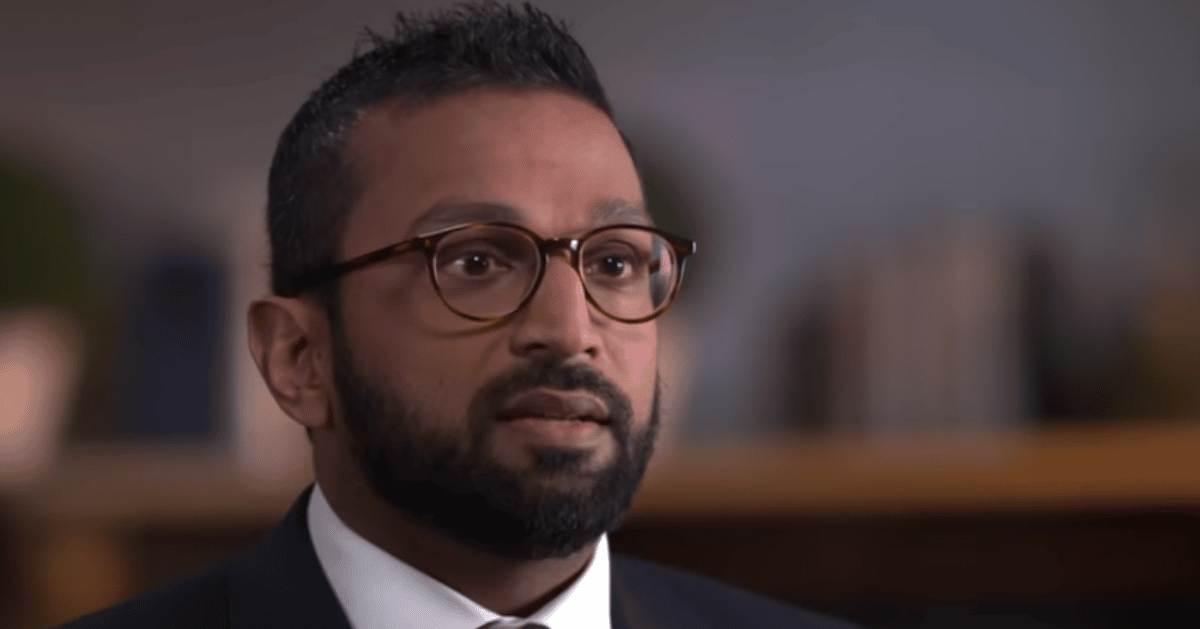
Is the FBI adrift in a storm of its own making under Director Kash Patel?
A blistering 115-page report from an alliance of active-duty and retired FBI agents and analysts paints a grim picture of Patel’s first six months at the helm, alongside Deputy Director Dan Bongino, alleging a lack of experience, unprofessional conduct, and a focus on personal branding over agency needs.
The report, styled as an official intelligence assessment with input from 24 sources, dubs the Patel-led FBI a “rudderless ship” and claims it’s in disarray.
Critics within the FBI aren’t holding back, slamming Patel as “in over his head” and lacking the gravitas needed to steer the agency, according to the alliance of agents and analysts.
His behavior during the investigation into the tragic assassination of Charlie Kirk on September 10, 2025, drew particular ire, with accusations of premature public statements that could have harmed the probe and taking undue credit for other agencies’ efforts.
Worse, sources report Patel unleashed an “expletive-laden tirade” at Special Agent-in-Charge Robert Bohls over perceived missteps in the case, a move that hardly screams steady leadership.
The very next day, on September 11, 2025, Patel’s antics in Provo, Utah, raised eyebrows when he refused to disembark from the FBI jet without a raid jacket—complete with Velcro patches—causing unnecessary delays.
Apparently, the jacket wasn’t up to his standards without those upper-sleeve patches, and FBI SWAT team members had to scramble to meet his demands. Talk about misplaced priorities.
Later that day, at a news conference on the Kirk case at Utah Valley University in Orem, Utah, with Bongino by his side, Patel’s focus seemed more on optics than outcomes.
Inside the FBI, resistance festers, with the report pointing to lingering “Trump Derangement Syndrome” among left-leaning factions who openly disdain the current administration.
Past recruitment practices, which allegedly favored more progressive-minded hires like teachers, are blamed for this cultural divide, while field office TVs tuned to MSNBC and CNN—but not Fox News—only fuel the perception of bias.
Patel’s response to leaks, like ordering polygraph exams for personnel at the FBI Academy in Quantico, Va., after a firearm request discussion went public, is called “punitive” by insiders and hardly builds trust.
On the brighter side, the report acknowledges Patel’s rollback of DEI policies, easing what many saw as an “administrative burden” on agents, a move that aligns with a no-nonsense approach to law enforcement.
Immigration raids alongside ICE are hailed as “overwhelmingly successful,” targeting dangerous criminals rather than law-abiding individuals, while casework and threat prioritization have boosted operational effectiveness with support from more aggressive prosecutors and the DOJ.
High morale among counterterrorism and criminal investigation teams at field office joint task forces, bolstered by the U.S. Attorney’s Office, marks a welcome shift from the prior administration’s perceived constraints, though reforms—like firing complicit senior executives—are seen as not going deep enough into mid-management.